Redesigning the Apple Card for a Chase-issued relaunch in 2028
On January 7, 2026, Apple named JPMorgan Chase as the replacing issuer for roughly 12 million cardholders. That is the only announced fact, and it sets a roughly two-year transition. Nothing about the card itself has been announced, so a straight handover with the same product on the other side is a real possibility. That runway is what this chapter argues should be spent redesigning the card rather than moving it.
This chapter redesigns that card, and it is the product I would put in front of both companies: what a new issuer changes, three outcomes rather than two, a reward system with a named dependency it cannot control, and a decline that has to hold up in writing.
A card people loved that never made money
Why the issuer leftGoldman Sachs does not walk away from a portfolio this size over one bad quarter. The Apple Card never turned a profit for Goldman Sachs in any year of the partnership. Reporting around the exit points at two failures. The card approved more risk than a premium product should carry, and the rewards were never strong enough to make it the card people reached for first.
An Apple Card with a subprime portfolio
Roughly 15% of Chase’s cardholders are subprime, and Capital One, a lender built around that segment, sits at 31%. The portfolio Goldman handed over was at 34%. So a card marketed on titanium and design was underwriting closer to a subprime specialist than to the premium issuer it presented as.
Risky lending, and losses in every single year
The Apple Card lost money for Goldman Sachs in every year it was reported. The unit housing it lost a reported $3.03B from 2020 through September 2022, was still losing $667M in a single quarter of 2023, and posted an $859M net loss in 2024. Break-even was promised for the end of 2022, pushed to 2025, and never arrived.
Rewards that never won top of wallet
The current structure pays 3% at Apple and a fixed list of partner merchants, 2% on Apple Pay, and 1% on everything else. So the best a cardholder could do outside Apple was 2%, and only by routing the purchase through the wallet, while the titanium card itself earned 1%. A flat 2% is the market floor for a catch-all card, and nobody switches cards to get it, and it is the ceiling here rather than the floor, so anyone comparing on value has better options and no reason to stay.
Who built the value, and who carried the risk
The partnership split cleanly, and the split is the story. Apple owned the brand, the Wallet integration, the application flow, and the acquisition engine, with Apple Payments Services LLC sitting in as a service provider rather than a bank. Goldman Sachs owned everything a bank owns: underwriting, the balance sheet the credit line is drawn against, funding, servicing, disputes, and the regulatory exposure that comes with all of it. Mastercard was the network.
Read the customer proposition against that split and the same question runs through every line of it. No annual fee, no late fee, no foreign transaction fee, 3% at Apple, 2% on Apple Pay, 1% everywhere else, and 0% financing on Apple hardware. Each one is a real cost, and the cardholder is not the one paying it.
What I will not claimThe customer agreement states what a cardholder earns, not how the two companies divided the cost of it. Reporting indicates Apple funded Daily Cash, and the contract terms have never been published, so I treat the exact allocation as unknown and carry it into chapter 2 as a negotiated variable rather than printing a split as fact.
So the question underneath the whole partnership was never whether the Apple Card was a good card. It was whether the issuer earned enough on the capital and the credit risk it put behind the card, the risk-adjusted return, to justify holding the portfolio at all. A product can be excellent for customers, extremely valuable to the platform whose name is on it, and still a mediocre investment for the bank funding it. Those are three separate scorecards, and only one of them was Goldman’s.
American Express has been reported as associated with successor discussions, and I have not found a primary source in which its leadership called the economics unattractive, so I do not repeat that as a quote. What survives the sourcing problem is the pattern. When more than one experienced card issuer looks at this book and hesitates, the difficulty may be structural rather than a Goldman execution failure, and that is the assumption chapter 2 tests with numbers.
The redesign
Rates, fees, and score weights are spec decisions. The percentages are outputs of my own routing model, not reported results. The rate comparison is against the Samsung Galaxy Card’s published terms.
Three products, spec by spec
Two of these are cards a customer can hold. The third is a decision not to issue one, and it is specified as carefully as the other two because it is the one someone will contest.
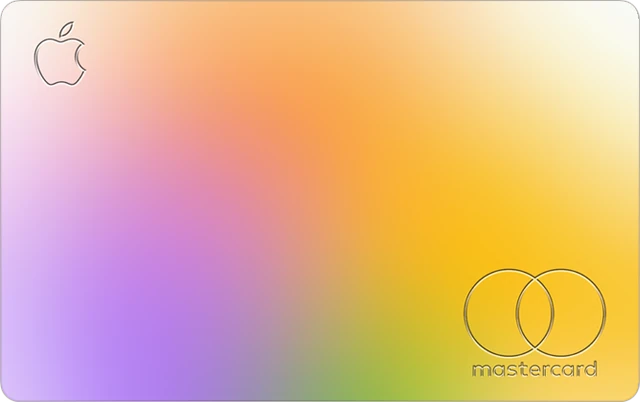
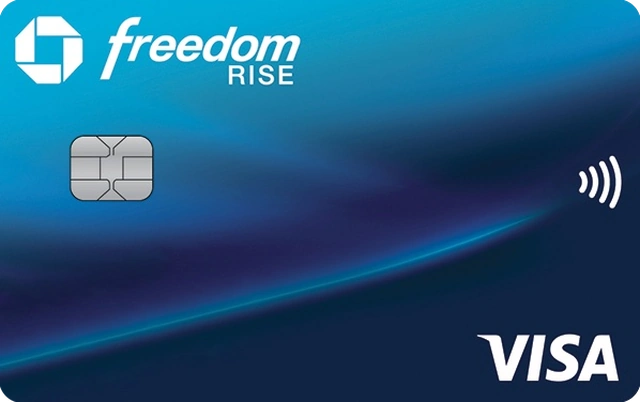
issued
Card art shows the current shipping products and the trademarks of their owners. No art exists for the Apple Card (2028), which is proposed here rather than announced.
How the routing decides
Routing is computed, not hardcoded. Five weighted factors produce a single risk score from 0 to 100 where higher is riskier, and the range that score falls into decides the outcome. The design choice that matters is the weighting. Missed payments carry more weight than the credit score itself, so a maxed-out FICO penalty still cannot outweigh two serious delinquencies.
A 780 FICO scores 18, well inside the 0 to 33 range, so it approves on score alone. But utilization at 88% with a delinquency on file trips all three parts of the credit-washing test, so the account declines regardless of the range it lands in. This is the case a single-number cutoff gets wrong, and the one that helps explain how the outgoing issuer ended up with a portfolio it did not want.
A mid-600s FICO with one past late payment looks superficially similar to the flagged case. Low utilization and no recent delinquency mean the flag never fires, and the score lands in the Apple Card (2028) range. Verified income through open banking can rescue a marginal case the same way. That pair is the test of the whole model, which has to catch manipulation without punishing recovery.
The decline is a product surface
Most product specs stop at what gets built. A decline is still an experience someone has, it is legally regulated, and it is the only outcome here that a customer will read as a judgment about them.
Federal fair lending law requires a lender to state the specific reason it declined someone. So every close carries a written notice naming the reason, pointing to the credit data behind it, and setting out what would have to change to qualify. That is the law, and it is also the only version of this outcome I would be willing to ship.
The account follows a pathway to closure rather than being switched off, and it carries the Path to Apple Card guidance with it. Someone whose debt load makes further credit unaffordable is not helped by losing access without warning, and an abrupt close is how a re-underwriting turns into a complaint file. These are still future customers, so the notice names what would have to change and how to come back. There is a reputational argument too. Consumer finance is the one place Apple cannot afford a bad story, and a migration that reads as mass account closures writes that story for it.
26% of declines are flagged because the score reads prime while the behavior underneath it does not. But low utilization with a lagging score is the signature of someone paying debt down, which is the opposite behavior and must never be flagged. Getting that distinction wrong would decline exactly the customers the program should keep, so it is specified explicitly rather than left to the model.
The 4% / 3% / 1% reward system
Three rates, and the structure is deliberately narrow. Both strategic rates go up by a point, from the current 3% at Apple and 2% on Apple Pay, while everything outside them stays at 1% on the titanium card and the virtual card alike. Raising the base instead would have spread the same budget across spend Apple earns nothing on, which is the opposite of what the diagnosis calls for.
Across the whole portfolio the Apple-funded share falls to 73.3%, because Chase Freedom Rise rewards are entirely issuer-funded, including the months a graduate spends there before moving up. The split is a negotiated commercial term and it changes none of the product design. The rates, the credit limits, and the graduation logic are identical either way. The split is a commercial term rather than a product decision, so chapter 2 tests it against a tougher split and finds that approvals, routing, declines, and retention are identical either way.
The dependency I would flag first
The 3% rate is the strategic heart of the design and it is the part the product cannot enforce, because a wallet rate only pays where the wallet is accepted.
What I would do about it. Treat 63.75% as a number to measure rather than one to assume. Instrument wallet share per cardholder from the first wave, report it alongside spend, and set a floor below which the 3% rate gets revisited rather than defended. The rate is worth keeping only while the routing behind it holds, and that is knowable within a quarter of launch. The product team cannot fix the other three, but it can watch them, so merchant declination and card-on-file migration both belong in the same dashboard.
This is where my two case studies meet, and it is why I built them both. My other study on this site, The Visa and Mastercard Interchange Settlement, works through a 2026 antitrust settlement that lets merchants refuse premium credit cards. That same rule is what can switch off the 3% rate in this design. A product person reading only the spec would see a clean reward architecture. A payments person reading only the litigation would see an interchange story. The 3% rate is where those are the same problem, and I would rather name that than let a reader find it.
Enhanced benefits and rewards
Before comparing this design to a competitor, it is worth setting it against the card it replaces. Most of what a cardholder can see survives the issuer change. What changes is where Chase has something Goldman did not.

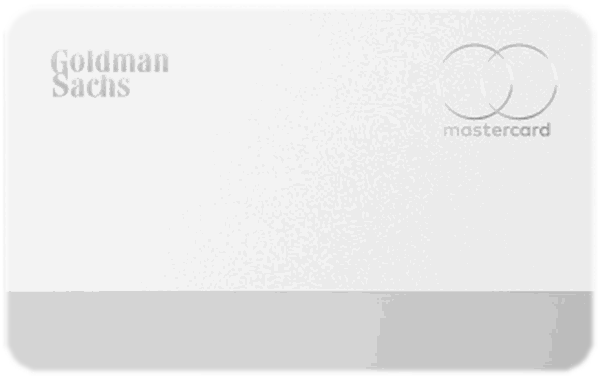
The legacy column describes the shipping product. The 2028 column is proposed in this chapter and has not been announced by Apple or Chase, and the 59.26% and 660 figures in it are outputs of my own model rather than published terms. Card art shows my mockup against the current card, neither an official rendering.
Why the graduation path is not a swap
The path that already existsChase Freedom Rise already has a graduation path, and it does not lead here. In the standard lineup, a Rise holder who pays on time is reviewed each year for an automatic in-place upgrade to Chase Freedom Unlimited, with no new credit check, because both are Visa cards on the same rails.
Where this design sends themThis design routes them toward the Apple Card instead, and that is a genuinely different mechanic. The Apple Card runs on Mastercard and Rise runs on Visa, so graduating cannot be a silent in-place swap. It has to be a pre-qualified offer, checked with a soft pull, opening a new account on approval. That is more friction than the standard upgrade, and it is deliberate. Sending credit builders toward the Apple Card deepens the same ecosystem relationship the whole migration exists to hold, and it only became possible because the same bank now issues both.
Chase Freedom Rise requires a Chase checking account today, so anyone routed there who does not already bank with Chase faces a second hurdle right after a decline. My answer is to let Apple Card Savings satisfy the requirement and offer enrollment inside the migration flow.
Graduation opens a new account, so it is an application, which puts it in scope of Chase's widely reported five-cards-in-24-months decline rule. That gate measures churn rather than credit, so I would carve out migration graduates and leave the rule intact everywhere else.
The offer for people who are not being migrated
Everything so far is about the 12 million people already holding the card. The relaunch also has to sell the card to people who have never had it, and those two jobs need different offers. Migrating cardholders cannot earn a welcome bonus, because welcome bonuses are for people who are new. New applicants approved for the Apple Card can.
All three offers are real, sourced Apple offers that ran and expired. What is proposed here is making them permanent, running them together as a menu, and presenting the choice at the approval decision. No lineup on those terms has been announced, and none of it is modeled in chapter 2, which prices the migration of existing cardholders rather than the acquisition of new ones. Sizing this offer would take its own model.
Why three offers and not oneApple has run these before, usually quietly through targeted email rather than public announcement. Rather than invent a structure, I would make the three most recent offers permanent and let the applicant pick one.
Three different offersThey are not variations on one idea. The $100 offer is conventional in shape, asking for spend rather than matching it, though at 20% it returns twice what the Samsung Galaxy Card pays at $200 after $2,000. The $75 offer is a full match. The $200 offer does not ask for spend at all, it asks for frequency. Apple tested all three separately, and running them together turns three experiments into one menu.
Why not one thresholdA single bonus asks every applicant the same question, and most cards pick a number high enough to filter out the casual signup. That works, and it also turns away people who would have become good customers at a lower bar. Three offers presented at approval let the applicant choose their own commitment, so the card meets someone at $75 who would have walked away from a larger threshold, and rewards the person who picks the ten-purchase offer for behaving like a primary cardholder from week one.
Can the offer be targetedThe offer is presented on the decision screen, after underwriting, so the score does exist by then and the question is a real one. The answer is still no, and the reason is policy rather than timing. Sizing a bonus to someone’s credit score means varying a marketing offer by their credit characteristics, which invites scrutiny that varying it by product does not.
What the score decides hereWhat the score does decide is whether there is an offer at all, because the offer belongs to the Apple Card and only to it. An applicant routed to Chase Freedom Rise gets no bonus. And because the bonus pays only after the spend clears, it never funds a line that should not have been extended.
Why the thresholds line upThat is deliberate. Chase Freedom Rise starts at a $500 line, and the $500 spend threshold would ask someone to run that line to the limit. The balance gets reported at statement close whether or not they pay it in full, and that is the utilization level that damages the score they opened the card to build. An offer that works against the product it is attached to should not be attached to it.
Targeting before the application is a separate lever, and it runs on everything Apple already knows that is not credit data, such as device count, active subscriptions, and whether someone uses Apple Pay at all. That steers who sees the offer rather than what it pays, which is how targeted offers usually work.
Where a new applicant who misses landsThe three outcomes apply here too. Someone who scores into the middle range gets Chase Freedom Rise with the same graduation path, and someone who clears neither bar gets a written reason and the guidance version of the same path. What changes is the offer rather than the routing, since a new applicant routed to Chase Freedom Rise has no Apple Card to keep and no welcome bonus attached to the starter card. The deposit requirement changes with it. A migrating cardholder can satisfy it with the Apple Card Savings account they already hold, but a new applicant has no Apple Card and therefore no Savings account, so for them the Chase checking requirement stands as written.
That is worth saying plainly because it means the starter card is not a migration artifact. It is the second rung of a two-product lineup, and it does the same job whether someone arrived by transfer or by application.
None of these three is invented, which is the point. Apple has already run each one and let each one expire, so the proposal is not a new instrument but a decision to stop treating them as experiments. What I would push hardest for is the ten-purchase offer, because it is the only one that pays for the behavior the rest of this chapter argues for. A spend threshold is cleared once and forgotten. Ten purchases a month is a habit, and a habit is what interchange actually runs on.
The $75 offer is a full match, which is unusually generous, though Apple has already run it and let it expire rather than made it permanent. What I would defend is the structure rather than the numbers. Letting the applicant pick their offer turns a filter into a question, and the answer is a signal about intended spending that no application field captures. Risk, loyalty, and growth are the three lenses worth applying to any cardholder, and the framework should not change depending on how someone arrived.
Against a product that actually launched
On July 20, 2026, Samsung and Barclays launched the Samsung Galaxy Card, with applications opening two days later. It is the closest thing to a live test of what this design proposes: another device maker, a card built on the same logic, and terms that are public. So I ran the comparison against the real thing rather than a hypothetical.
Apple enters by migrating an existing portfolio of roughly 12 million cardholders, so it can afford a leaner 4% on its own store. Samsung enters net-new from a smaller wallet base, about 15 million Samsung Pay users against roughly 71.6 million for Apple Pay, and buys attention with 5%, a streaming lane, and a $200 bonus, which is the same size as the largest offer Apple has already run.
Apple stays on Mastercard, Samsung entered on Visa, and for a payments read this is the most interesting line here. The incumbent holds its existing rails while the challenger enters on the other one, which is a sequencing choice rather than a pricing one.
Samsung out-rewards on the headline rate and adds a streaming category, casting a wider everyday net. This design keeps a tighter structure where everything outside Apple and Apple Pay earns 1%, betting on ecosystem depth rather than category breadth.
Apple Card prints no card number on the physical card. A device-specific token lives in the Secure Element, and the security code rotates per transaction. Samsung's card is a traditional Visa with a printed number, tokenized only when you tap Samsung Wallet. For a wallet-first card, the security model is the product, not a feature layer.
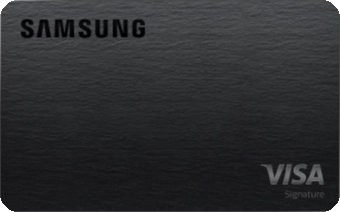
The Apple column is the proposed design from this case study and its figures trace to my product model, and the Apple card art is my own mockup shown against the live Samsung product, so neither rendering is official and both carry the marks of their respective owners. The Samsung column reflects the product as announced, with reward rates, APR, fees, and financing terms from the Samsung Galaxy Card terms and conditions issued by Barclays Bank Delaware, rate disclosures current as of June 30, 2026 at a prime rate of 6.75%. Samsung also runs a separate legacy store-financing program at a different rate, which is a different product and is not represented here.
Samsung out-rewards on paper, 5% on its own store against 4% here. But its APR range of 23.49% to 32.24% sits above this design's 18.49% to 29.74% at both ends, and it charges late fees up to $41 where this design charges none. For anyone who ever carries a balance, the higher carry cost eats the headline rewards. Samsung's design rewards the customer who pays in full. This one is friendlier to the occasional revolver.
All three major services bill outside Apple's rails. Netflix ended Apple billing for new and existing members, Disney no longer lets new or returning subscribers pay through Apple, and Spotify's iOS app links out to its own checkout, which offers Cash App Pay but not Apple Pay. Avoiding the App Store commission is the widely reported motive. Since the 3% rate is a wallet rate, a category that has left Apple's payment rails cannot reach it, and Samsung's dedicated 2% takes that row.
Why Apple kept Mastercard as its network
The choice. Apple did not arrive at Mastercard by default. During the search for a replacement issuer, Visa reportedly bid about $100 million upfront for the account, and American Express offered to serve as both issuer and network, with Apple choosing the network before the bank. Mastercard kept it anyway.
The likely reason. The likely explanation is execution risk. Switching networks would re-provision every Apple Pay credential through a different token service and reset merchant-side acceptance behavior, on top of an issuer change that already reissues roughly 12 million accounts. Against a portfolio that size, a $100 million signing payment is small next to the cost of changing both at once.
The cost. There is a cost to that choice worth naming, and this chapter runs into it directly. Chase Freedom Rise is a Visa card. Had the Apple Card moved to Visa too, graduation could have been an in-place product change on the same rails, with no new account and no credit pull. Staying on Mastercard means the two products sit on different networks, so graduating requires a pre-qualified offer, a soft pull, and a new account. That is more friction on the exact path this design asks people to take.
The principle. Turning down $100 million to avoid changing two things at once is the most instructive decision in this whole story, and it has nothing to do with rewards or credit. It is a sequencing call. Whoever made it understood that the cost of a migration shows up in the number of systems you touch at the same time, well beyond the price of the deal. That is the same reasoning behind running this rollout in ten waves rather than one, and it is the part of payments I find most interesting. The constraint is almost never the economics.
The same standard, applied here. That standard applies to my own design too, and the friction is real. What makes it acceptable is scale and timing. Graduation is one account at a time, opt-in, and spread across years, while a network switch would touch every credential at once during a migration already reissuing roughly 12 million accounts. Same principle, opposite side of it.
What this chapter settles, and what it hands off
- Three outcomes rather than two, with a documented path between them.
- The reward architecture, the fee posture, and the rate spread.
- Routing thresholds, and that behavior can override the score in both directions.
- That every decline carries a written reason, because the law requires it and the product should want it.
- The acquisition offer for new applicants, drawn from Apple’s three real offers and made permanent.
- Where this design wins and loses against a live competitor, and what it adds against the card it replaces.
- That the network stays on Mastercard, and that graduation accepts a soft pull as the cost of it.
- Whether the design pays for itself, which is the business case in chapter 2.
- Whether a self-selected menu beats a single offer, which needs testing rather than specifying.
- Whether Apple agrees to fund 75% of rewards, which is a negotiation rather than a design decision.
- What share of spend actually routes through the wallet, which the model sets rather than measures.
- How the decision feels to the person receiving it. Chapter 3 runs this exact score against five applicants, so a reader can work the model rather than read about it.
How this affects travel
The redesign is built for the points, miles, and cashback community, the people who optimize spend for discounted or free travel. A card that pays better on the everyday categories a traveler actually hits, Apple and the wallet, earns more points per dollar on the spend that already happens, which is what funds the trips. It is not a travel card. It is the everyday card that pays for the travel card.
Where it competes with travel cardsA 4% rate on Apple and 3% on the wallet competes with dedicated travel cards for everyday earn, not on the travel purchase itself. Travel cards win at the airline counter and the hotel, where this card sits at 1%. The point is that the traveler does most of their earning away from those counters, on coffee, groceries, and subscriptions, and a competitive wallet rate on that base is what keeps a co-brand card in the rotation alongside a travel card rather than instead of one.
The spend it never capturesTravel spend booked through its own checkout, an airline site, a hotel app, a rental car form, moves away from the wallet, not toward it. Every service that takes a card number instead of a tap converts that spend from the wallet rate to the base rate permanently. That is the spend a wallet-rate card never captures, and it is why this redesign leans on cash back that funds travel rather than competing with transfer-partner cards on the trips themselves. The best a redesigned Apple Card does for a traveler is complement a Chase Sapphire card, not replace it. The Apple Card earns the everyday cash back that funds the trip, while Sapphire earns the transfer points that pay for the flight itself. For Chase the two cards complement rather than compete: the Apple Card keeps a traveler's everyday spend inside the Apple ecosystem and hands that traveler to Sapphire as the points-and-perks upgrade, so the relaunch grows the Sapphire business rather than cannibalizing it.
What changes for the communityFor a member of the points and miles community, the redesign means the card they already carry for Apple Pay becomes a better earner on the spend they were making anyway, with fewer of the locked-category limits that made the legacy card finish last against ten cashback cards. More earn on everyday spend means more points redirected to travel, with the travel booking itself left to the cards built for it.
What I would scope next
Three questions this chapter opens and does not answer. All three came out of decisions made here rather than from a wishlist, which is why they are worth naming.
The routing proposal leans on Apple Card Savings continuing under Chase, which the business case already prices. What it does not settle is whose brand the account carries once the issuer changes, and Apple attribution would keep the eligibility factor somewhere the cardholder already looks.
The lesson underneath that is the part worth designing around. A deposit product scoped to a card partnership inherits the partnership’s lifespan, so whoever owns the brand also owns what happens to the balances when the deal ends. That is an argument for settling attribution before launch rather than after.
I recommend exempting graduates from the five-cards-in-24-months screen, and I never sized what happens if Chase says no. Every graduate blocked on card-opening velocity is a graduation the 59.26% counts and the portfolio does not get.
Closing that gap needs a distribution of recent card openings across the cohort, which is not something I can observe from outside, and it is the first thing I would ask a real portfolio for.
This design holds the base rate at 1% and puts the increase into the two strategic rates instead. That is the right call if wallet routing holds, and it leaves the card behind flat-rate competitors on everything a phone cannot pay for.
Moving it to 1.5% would close that gap and cost real money on volume the model treats as low value. I did not price it, and the number that decides it is the share of spend that never reaches the wallet, which is the same input the routing dependency already turns on.
The limits of this chapter
The channel model cannot see spend leaving. This is the real defect, so it gets stated twice. Because total spend is held fixed and mix responds only to my own rate settings, steering toward the wallet always looks accretive. Any conclusion that depends on the 3% rate inherits that flaw, and no amount of careful rate design fixes a model that cannot represent the downside.
The graduation rate is an output, not an observation. 59.26% comes from my own model. It is the single number the Chase Freedom Rise path rests on, and if it is materially lower the middle path becomes much harder to argue for on economics rather than on principle.
One column is real and one is not. The Samsung terms are published and checkable. Mine are a proposal. Setting them side by side is the most useful thing in this chapter and also the most misleading format available, which is why the modeled column is labeled in the header rather than the footnotes.
One piece of card art is my own mockup. The proposed design in the head-to-head is a rendering I made, not an Apple or Chase design, and no official art exists for it. Every other card shown is a current shipping product and the trademark of its owner, included to orient a reader rather than to represent anything proposed.
The reward rates depend on a term I cannot set. Both raised rates assume Apple funds 75% of them, and no such split is published for the current card. If Apple funds less, the issuer absorbs rates it does not control, and the whole reward argument in this chapter moves with a number I invented.
One rule I lean on is not published. The five-cards-in-24-months screen is inferred from applicant reporting rather than documented by Chase, and I recommend a carve-out from a rule no one has confirmed exists in the form described. If the real policy differs, the carve-out argument changes with it.
The deposit workaround assumes a product survives. Letting Apple Card Savings satisfy the Chase Freedom Rise requirement only works if Savings continues under the new issuer, and the Goldman version wound down at exit. That is an assumption this chapter and the business case both rest on.
I did not test the decline language. The spec says a written reason is required and names the legal basis. It does not say whether the wording a customer receives actually reads as fair to them, and I have not put it in front of anyone to find out. That is research, not design, and it is missing.
What is published, and what is mine
Glossary
Independent professional-development project. The product design is a proposed concept built on synthetic account data, not an announced plan, and it is an Apple-inspired concept rather than an official Apple product. Not affiliated with, authorized by, or endorsed by Apple, JPMorgan Chase, Goldman Sachs, Mastercard, Visa, Samsung Electronics America, or Barclays. The public facts relied on are listed in the sources. Card art, where shown, depicts current products and the trademarks of their respective owners. Every other figure is an output of my own simulation model, which is not published, and none of it is legal, financial, or investment advice. © 2026 Darnell Wilson. All rights reserved. The writing, analysis, models, and design of this case study are my own original work. Company names, card products, and trademarks referenced belong to their respective owners and are used for identification and commentary only. Please do not reproduce, republish, or reuse this material without written permission.